Limited-Time Offer Menu Board Strategy: How to Launch Specials Without Slowing Service
Limited-time offers can be one of the easiest ways to create urgency, test new items, use seasonal ingredients, and give regular customers a reason to come back. They can also create the exact opposite result when the offer is hard to understand, poorly timed, buried on the menu, or promoted after the kitchen is already overloaded.
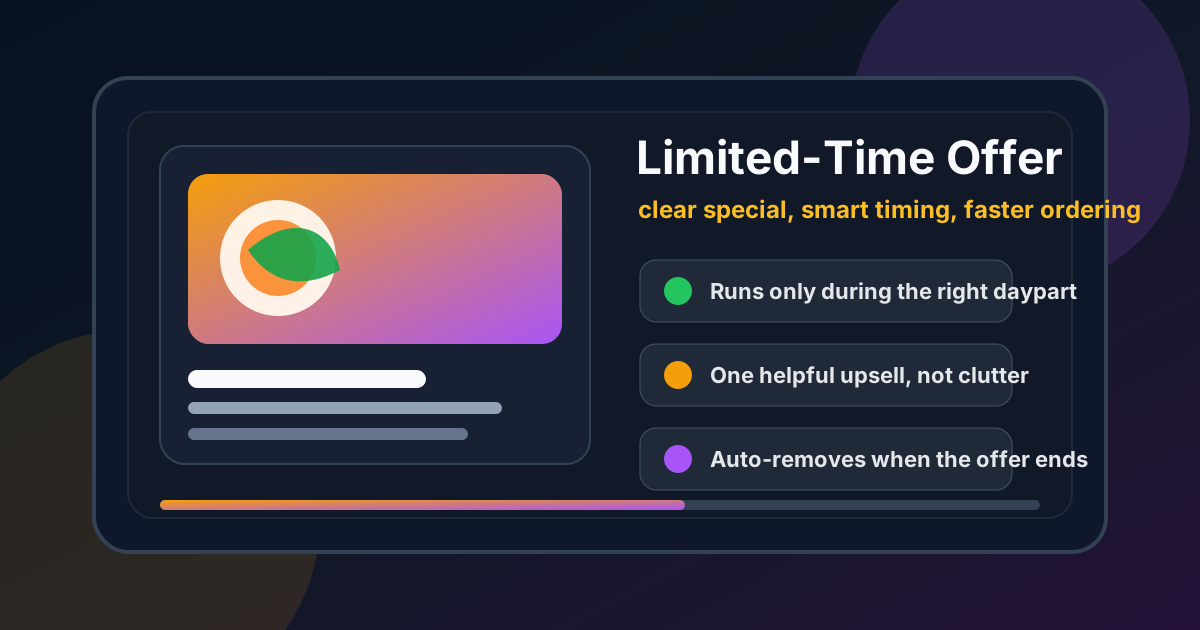
A digital menu board gives restaurants more control than a printed insert or handwritten sign. The offer can appear only during the right daypart, use a strong photo, rotate with a matching drink or side, and disappear automatically when the promotion ends. The mistake is treating that flexibility as permission to add more noise. A good limited-time offer strategy is not about showing everything. It is about making one timely choice obvious.
The most useful promotions have a clear job. Some are designed to increase average order value. Some move seasonal inventory. Some test a potential permanent menu item. Some create a reason to visit during slower hours. Before the design work starts, decide which job the offer needs to do. That one decision shapes the wording, placement, timing, photography, and measurement.
Choose one primary offer per screen zone
Restaurants often try to promote too many specials at once. The result is a board where every item claims to be new, featured, popular, or seasonal. Guests scan for a few seconds, fail to find the point, and order what they already know. The promotion technically appeared on the screen, but it did not change behavior.
Start by assigning each major screen zone a job. The top or largest visual area can promote the main limited-time item. A smaller adjacent area can suggest the best add-on. A lower area can support the regular menu. This keeps the special visible without turning the whole board into an advertisement.
If the restaurant has multiple screens, avoid duplicating the same messy layout across all of them. Use one screen to introduce the seasonal item with a strong photo and one sentence. Use another to keep the core menu readable. Guests still need to order quickly, and regular customers still need to find their usual items.
Write the offer so guests understand it fast
A limited-time offer should be understood in one glance. That means the name, main ingredient, price, and reason to care need to be clear. Clever names are fine when they are supported by plain language. A guest should not have to ask the cashier what the item actually is, what comes with it, or whether it is available now.
A practical structure is simple: short name, appetizing description, price, availability note, and one add-on prompt. For example, a cafe might show: Strawberry Basil Lemonade, house lemonade with strawberry puree and fresh basil, available through Sunday, add a pastry for 3. The copy is not flashy, but it answers the questions that slow ordering.
Match the promotion to the right daypart
Not every offer should run all day. A rich dessert photo might work well after dinner but distract at breakfast. A lunch combo might be perfect from 11 AM to 2 PM but unnecessary during a slower afternoon period where guests are more open to browsing. A happy hour special should not occupy premium screen space at noon unless it is clearly labeled as coming later.
Digital boards make dayparting practical. The same offer can change emphasis throughout the day. In the morning, a bakery can promote coffee pairings. At lunch, the screen can shift to sandwiches and faster combos. In the late afternoon, it can promote take-home pastries before close. The offer calendar should follow how guests actually order, not just when the manager remembered to update the board.
Check kitchen capacity before choosing the featured item
The most photogenic special is not always the best item to feature. If it requires a slow station, a rare ingredient, extra staff explanation, or too many custom steps, it may hurt service during peak hours. A successful limited-time offer needs to be profitable and operationally safe.
Before launching the promotion, ask a few practical questions. Can the kitchen make this item quickly when ten guests order it in a row? Does it depend on one employee who knows the prep? Can ingredients be stocked reliably through the promotion window? What should the screen show if the item sells out? These questions are not glamorous, but they prevent the menu board from creating avoidable stress.
If the item is valuable but slower to execute, schedule it for softer periods or frame it as a dine-in feature instead of a rush-hour combo. A digital board should adapt to the kitchen, not force the kitchen to chase a promotion that looked good in a mockup.
Use photography selectively
Food photography can make a limited-time offer feel real and craveable, but only if the image is clear. One strong photo is usually better than a collage. The item should fill the frame, look like what the guest will actually receive, and match the restaurant's plating. Overstyled photos create disappointment, especially for seasonal specials that depend on trust.
For menu boards, the photo also needs to work from the real viewing distance. Tight details that look great on a laptop may become meaningless from twelve feet away. Use contrast, simple backgrounds, and recognizable shapes. If the special is a drink, show color and garnish clearly. If it is a combo, make the main item dominant and keep sides readable.
Pair the special with one helpful upsell
A limited-time offer is a natural place to suggest an add-on, but the upsell should feel like service, not pressure. The best pairing completes the meal or improves the experience. A spicy sandwich with a cold drink. A seasonal latte with a pastry. A family pizza special with a salad. A burger feature with a premium side.
Keep the prompt specific. Add any side is weaker than add garlic fries for 4. Make it a combo is weaker than make it a lunch combo with drink and chips. Specific prompts reduce decision time and give staff an easy phrase to repeat at the register.
Plan the ending before launch day
Many specials linger too long because nobody planned the end. The board keeps showing an item after ingredients are gone, after the season has passed, or after staff has stopped mentioning it. That makes the restaurant look less organized and creates awkward conversations at the counter.
Every limited-time offer should have an end rule. The rule might be a date, an inventory threshold, or a replacement item. When the offer ends, the board should switch to the next best message automatically or as part of a scheduled weekly update. If the item sold well, save the design and performance notes so it can return later with less effort.
Measure more than sales
Sales matter, but they are not the only signal. Review average order value, item mix, ticket time, staff questions, sellout timing, waste, and guest feedback. A special that sells well but slows the line may need a different daypart. A special that sells moderately but improves add-on rates may be worth repeating. A special that creates constant questions needs clearer copy.
The benefit of digital menu boards is that restaurants can keep improving. Change one variable at a time: photo, placement, wording, price framing, add-on, or schedule. Small changes make it easier to learn what actually moved the result.
Make limited-time offers feel intentional
Guests notice when a restaurant treats specials as an afterthought. They also notice when the menu feels current, clear, and useful. A well-run limited-time offer does not need to be loud. It needs to be timely, easy to understand, operationally realistic, and connected to a better ordering experience.
Digital menus are ideal for this kind of disciplined promotion. They let a restaurant feature the right item at the right time, support it with one smart upsell, remove it when the moment has passed, and learn from the results. That is how a seasonal special becomes more than decoration. It becomes a small, repeatable system for improving sales without making service harder.
Want cleaner limited-time offer menus?
Zenith Digital Menus designs, installs, and manages restaurant menu boards that keep specials readable, timely, and easy to update. Request a consultation.